
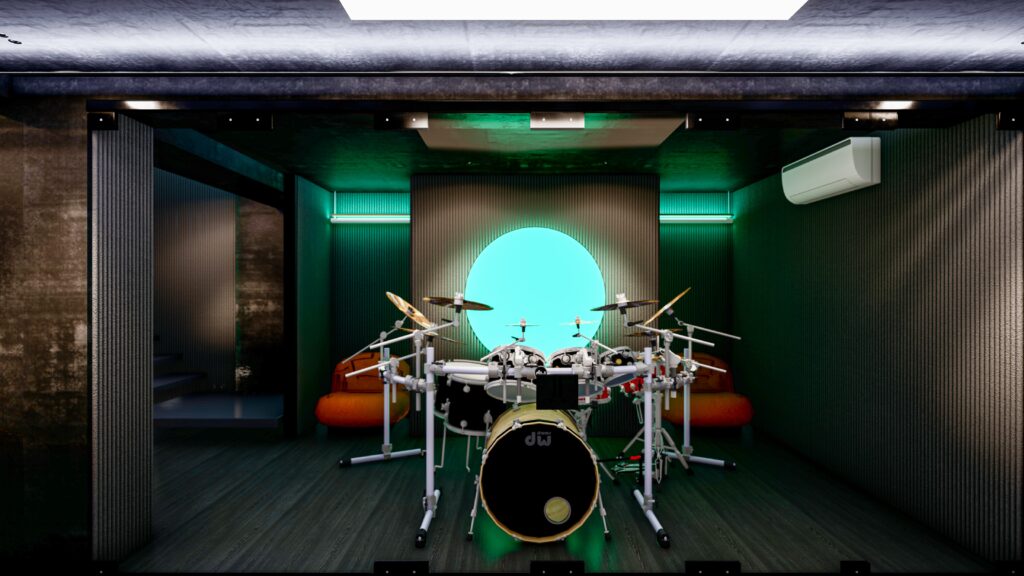
For decades, the Digital Audio Workstation (DAW) has been the central nervous system of music production. It’s where the human genius of composition meets the technical craft of engineering. But a new partner has entered the control room: Artificial Intelligence (AI).
AI is no longer a futuristic concept; it’s an embedded, practical co-pilot that is fundamentally changing how we compose, mix, and master music, making the process faster, more accessible, and bursting with new creative possibilities.
I. Composition & Idea Generation: Conquering the Blank Page
One of the biggest hurdles for any producer is the blank project file. AI is proving to be an unparalleled brainstorming partner, helping artists overcome creative block instantly.
- Intelligent MIDI Generation: AI-powered plugins (like those in the Orb Producer Suite) can instantly analyze your key and tempo, and then generate complex, harmonically rich chord progressions, basslines, and melodies that fit seamlessly into your track. This isn’t random; it’s intelligent, theory-based suggestion.
- Sample Creation & Management: Tools like Algonaut Atlas 2 use machine learning to analyze your entire sample library, instantly mapping sounds by similarity, rhythm, and timbre. This cuts down on the hours spent digging through folders, letting you find the perfect kick drum or hi-hat loop in seconds.
- Text-to-Music (Generative AI): Platforms like Suno or Udio allow you to type a prompt (e.g., “A chillwave track with 80s synth arpeggios and a dark atmosphere”) and generate a fully arranged track or song snippet in seconds. This allows producers to quickly prototype ideas or create custom background music.
II. Mixing & Mastering: The AI Engineer
Perhaps the most significant impact of AI has been in the technical, often time-consuming, stages of mixing and mastering. AI acts as an assistant engineer, providing expert, objective analysis.
1. The Intelligent Mixing Assistant
AI-driven mixing plugins, such as iZotope’s Neutron, analyze the spectral content of individual tracks in your session.
- Unmasking Frequencies: The AI listens to the entire mix, identifies where one instrument is masking (or clashing with) another (e.g., the bass sitting on top of the kick drum), and suggests precise EQ cuts and gain adjustments to clear the frequency spectrum.
- Auto-Balancing: These tools can analyze the genre and style of your track and automatically set initial levels, compression, and panning to achieve a balanced, professional-sounding starting point for your mix.
2. Automated & Adaptive Mastering
AI mastering platforms (like LANDR and iZotope’s Ozone Master Assistant) analyze your final stereo mix and apply mastering adjustments based on millions of professionally mastered tracks.
- Loudness Compliance: They ensure your track adheres to modern LUFS standards for different streaming services (Spotify, Apple Music), preventing your music from being turned down or sounding squashed.
- Tonal Balance: The AI compares your track’s tonal balance to commercial targets and applies EQ, stereo widening, and limiting to give your song a final, polished sheen that translates across all playback systems.
III. Efficiency, Accessibility, and Ethics
The integration of AI isn’t just about cool features; it has massive implications for the industry’s structure.
1. Democratizing Production
AI tools dramatically lower the entry barrier for music production. You no longer need years of dedicated practice to understand complex concepts like compression ratios or phase alignment. A beginner can use an AI assistant to achieve near-professional results in minutes, allowing them to focus entirely on the creative aspects of songwriting.
2. The Shift in the Producer’s Role
AI doesn’t replace the producer; it shifts their role from Technician to Curator.
The human producer’s value now lies in:
- Taste and Emotion: Injecting the unique, human-centric emotional depth and cultural context that an algorithm cannot replicate.
- Curation and Vetting: Selecting the best AI-generated ideas and expertly blending them with human performances.
3. The Ethical Landscape
The rapid rise of AI brings necessary discussions about ownership and originality:
- Copyright: Who owns the copyright to a melody generated by an AI platform? The user, the platform, or is it public domain? The legal framework is still catching up.
- Voice Cloning: The technology to clone a singer’s voice from a small audio clip is already here, raising huge questions about consent and intellectual property for artists.